


HOMOEOPATHIC MANAGEMENT OF IRRITABLE BOWEL SYNDROME: A NARRATIVE REVIEW
Authors
DOI:
https://doi.org/10.59939/3048-6270.2026.v4.i1.1Keywords:
Irritable bowel syndrome, homoeopathy, functional bowel disorder, Rome IV, repertory, individualized treatmentAbstract
Background
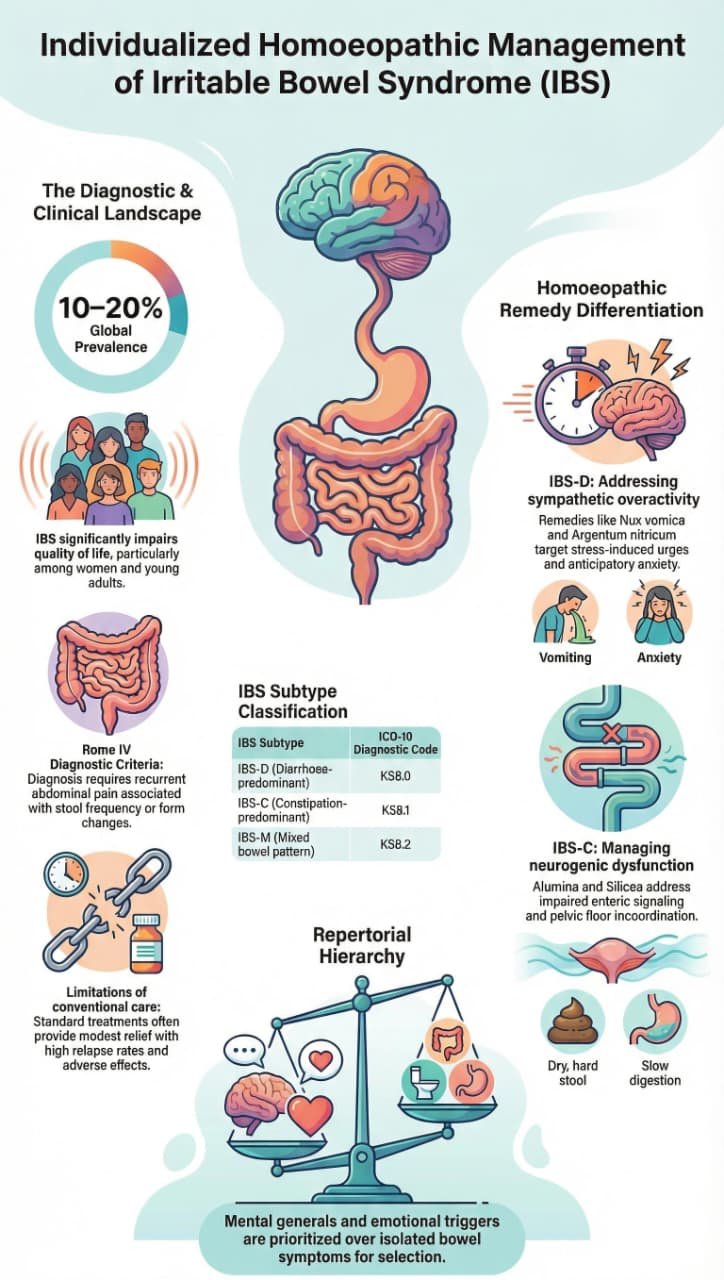
Irritable Bowel Syndrome (IBS) is a chronic functional bowel disorder characterized by abdominal pain associated with altered bowel habits, diagnosed in the absence of structural pathology. Owing to its multifactorial pathophysiology involving gut–brain interaction, psychosocial stressors, and visceral hypersensitivity, IBS remains therapeutically challenging and significantly impairs quality of life.
Objective
To critically review the scope and applicability of individualized homoeopathic management in IBS, with emphasis on clinical differentiation, repertorial approach, and remedy selection according to IBS subtypes.
Methods
A narrative review of peer-reviewed biomedical journals, gastroenterology consensus guidelines, homoeopathic materia medica, repertories, and classical texts was undertaken. Emphasis was placed on diagnostic criteria, symptom patterns, and clinical application rather than general description.
Results
Evidence indicates IBS to be a heterogeneous disorder requiring individualized treatment. Homoeopathy, through constitutional prescribing and symptom totality, offers a patient-centered therapeutic model. Specific remedies demonstrate utility when selected according to bowel pattern, mental concomitants, and modalities.
Conclusion
Homoeopathic management of IBS extends beyond symptomatic relief and requires structured diagnosis, repertorial analysis, and remedy differentiation. When applied systematically, it has potential to address both gastrointestinal and psychosomatic dimensions of IBS.
Author Biographies
Downloads
Published
Issue
Section
License

This work is licensed under a Creative Commons Attribution-NonCommercial 4.0 International License.
This article is Open Accessible and licensed under a Creative Commons Attribution NonCommercial 4.0 International License. You are welcome to use this work non-commercially as long as author is credited by citing the work.